

In this article
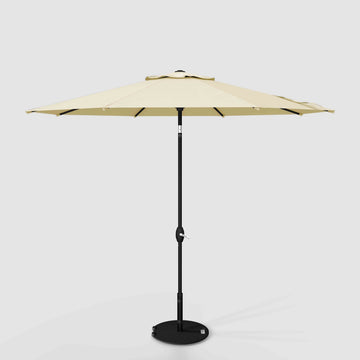
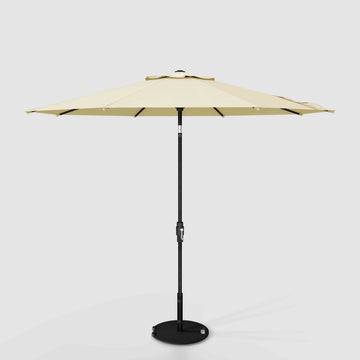
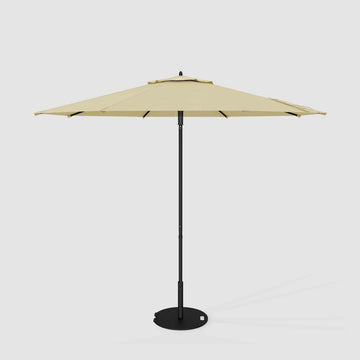
A market umbrella is the original outdoor shade structure: a large, freestanding canopy mounted on a center pole, designed to shelter a table and its occupants from sun and light rain. The style traces its roots to open-air marketplaces in Europe, where vendors needed reliable, portable shade that could go up and come down quickly each day. Today the market umbrella has become the go-to choice for residential patios, restaurant terraces, and poolside lounges alike — and modern engineering has made them more wind-resistant, weather-proof, and stylish than ever.
What to look for
- Canopy fabric: look for solution-dyed acrylic (like Sunbrella or Terylast) for true fade and mildew resistance
- Frame material: aluminum resists rust; fiberglass ribs flex under wind instead of snapping
- Opening mechanism: crank, push-button, or tilt systems affect daily ease of use
- Rib count and canopy size: more ribs mean a more stable, fuller dome — size should match your table diameter plus at least 2 ft on each side
The Anatomy of a Market Umbrella
At its core, a market umbrella consists of three components: the pole, the ribs, and the canopy. The pole — typically made from aluminum or hardwood — runs through the center of a table with a pre-drilled hole, or sits in a freestanding base. The ribs extend outward from a hub at the top of the pole and are connected to the canopy fabric, forming the characteristic domed or flat profile you see everywhere from sidewalk cafés to suburban backyards.
What separates a good market umbrella from a great one is what those components are made of. Powder-coated aluminum poles resist corrosion even in coastal environments, while hardwood poles offer a warmer, more traditional aesthetic that pairs naturally with teak or eucalyptus furniture. Fiberglass ribs are worth seeking out because they flex under gusts rather than transferring stress directly to the hub — that flexibility dramatically extends the life of the umbrella in areas with afternoon wind.
The canopy itself is where most of the performance lives. Solution-dyed acrylic fabrics like Sunbrella and Terylast lock color into the fiber at the manufacturing stage, meaning UV rays and moisture cannot bleach or degrade the appearance over years of use. A quality canopy will also feature reinforced vent panels at the top — these allow hot air to escape and reduce the sail effect that causes cheaper umbrellas to invert or pull out of their bases.
Best for: Anyone who wants to understand the basics before shopping — homeowners, buyers, and first-time purchasers


How Market Umbrellas Open and Close
The opening mechanism might seem like a minor detail, but if you're raising and lowering your umbrella every single day — which you should, to protect it when it's not in use — ease of operation matters enormously. Traditional crank-lift systems use a handle on the pole that you wind to draw the canopy up along the ribs; they're reliable and broadly compatible with most bases and tables. Push-button and push-and-pop mechanisms take that convenience a step further, letting you open a large canopy with a single motion and minimal effort.
Tilt functionality is another consideration within the umbrella's opening system. Most market umbrellas offer a collar tilt — a simple pivot point near the top of the pole that lets you angle the canopy toward the sun as it moves across the sky. More refined mechanisms use a button-release tilt that locks cleanly at set angles without the canopy slipping. If you're placing your umbrella on a west-facing patio where afternoon glare is the main problem, a smooth, reliable tilt can be the difference between an umbrella you actually use and one that ends up folded against the fence.
It's also worth noting that the opening mechanism affects how the umbrella performs under stress. A spring-loaded push-button system tends to seat the ribs firmly at the hub, creating consistent tension across the canopy. That taut, even tension is part of what makes the umbrella resist wind — a loosely opened canopy with uneven rib engagement will flutter, stress the fabric seams, and eventually fail prematurely.
Best for: Homeowners who want quick, effortless shade — especially those who open and close their umbrella daily

Choosing the Right Size and Shape
Market umbrellas come in round, square, and rectangular canopy shapes, and sizing typically ranges from about 7.5 feet in diameter for intimate bistro tables all the way up to 11 or 13 feet for large dining sets. The standard sizing rule is simple: your canopy should extend at least 2 feet beyond the table edge on all sides. This ensures the people sitting at the perimeter — not just the center — are actually shaded, and it keeps the canopy from looking disproportionately small against a generous outdoor dining set.
Round canopies are the most traditional and versatile shape, pairing naturally with round or square tables and creating that classic, symmetrical look associated with café culture and resort terraces. Rectangular canopies make more practical sense over rectangular dining tables of 6 to 8 seats, as they shade the full length of the table without leaving the ends exposed. Square canopies split the difference, working well over square tables in the 48-to-60-inch range.
When sizing for a space rather than a specific table — say, a lounge area with a sofa and coffee table, or a wide deck with a sectional — err on the side of larger. A generously sized canopy creates a sense of outdoor room definition, anchoring the furniture grouping the way a rug does indoors. Pair a larger canopy with a weighted commercial-grade base (at least 50 lbs for anything 9 feet and up) and you'll have a setup that stays put even when the afternoon breeze picks up.
Best for: Shoppers trying to match umbrella dimensions to a specific table, patio, or seating arrangement


Market Umbrellas for Commercial and Hospitality Use
Restaurants, hotels, resorts, and event venues operate under a fundamentally different set of demands than residential patios. A commercial-grade market umbrella needs to withstand daily setup and breakdown cycles, extended hours of full sun exposure, the occasional rough handling by staff, and the scrutiny of guests who notice details. This means the standard for frame thickness, canopy weight, and hardware quality needs to be noticeably higher than what you'd find in a big-box entry-level model.
Commercial applications also demand canopy fabrics that hold their color and structural integrity across thousands of hours of UV exposure without looking tired. Solution-dyed acrylics like Terylast are specifically engineered for this type of sustained performance — the color is consistent all the way through the fiber, so even as the fabric wears over years of service, it doesn't develop the chalky, faded appearance that woven-dye fabrics show. For hospitality buyers, a canopy that looks fresh and vivid after three seasons of heavy use is a direct reflection of brand quality.
Pole diameter and base compatibility are also critical commercial considerations. Thicker-walled aluminum poles — often 1.5 to 2 inches in diameter — resist the bending moment created by large canopies in wind, and heavy commercial bases with ballast options (sand or water fill) provide the anchoring weight needed for open terraces without fixed infrastructure. If your venue doesn't have the option of core drilling or in-ground mounting, a properly weighted free-standing base is your first line of defense against umbrella movement and tip-over.
Best for: Restaurant owners, hotel operators, event planners, and anyone outfitting a high-use commercial outdoor space

Style and Aesthetics: Making the Right Visual Choice
A market umbrella is one of the most visible design elements in any outdoor space, so aesthetics matter just as much as function. The pole finish, canopy color, and overall proportions should complement your existing furniture, architecture, and landscape rather than compete with them. A slim, neutral-toned canopy in off-white or stone tends to read as timeless and versatile — it pairs with everything from contemporary powder-coated aluminum furniture to traditional wrought iron. Bolder colors and patterns create energy and personality, making them a natural choice for resort pools, vibrant restaurant patios, or playful residential spaces.
Hardwood poles with a natural or oiled finish bring warmth and texture to settings where metal might feel too industrial. Teak, eucalyptus, and other sustainably sourced hardwoods also weather beautifully over time, developing a silver-gray patina that many outdoor design enthusiasts actively seek out. For a more refined look, paired with a polished or brushed aluminum pole, the contrast between material warmth and modern precision is a design strategy used regularly in high-end hospitality design.
Ultimately, the best-looking market umbrella is one that's sized correctly for its space and that shares a visual language with everything around it. An oversized canopy in a vivid color can feel overwhelming on a small urban balcony; a barely-there 7.5-foot canopy in pale linen can disappear against a sprawling resort terrace. When in doubt, go one size up and choose a canopy color that echoes an accent already present in your cushions, planters, or flooring.
Best for: Design-conscious homeowners and commercial buyers who want shade that looks as good as it functions
Frequently asked questions
A market umbrella is one of the simplest, most enduring ways to make outdoor space genuinely livable — the right one combines smart engineering, quality materials, and proportions that fit your specific setting. Explore Midtown Umbrellas' full range to find the model that delivers the shade, style, and durability your space deserves.
Keep reading
Related guides
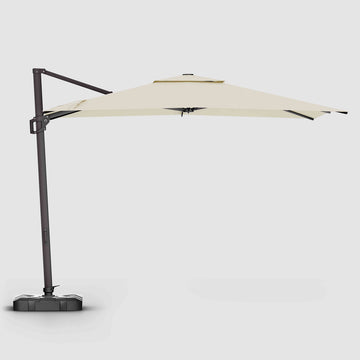
 Tips & careWhat Is a Cantilever Umbrella?
 Tips & careHow to Keep a Patio Umbrella From Blowing Away
 Tips & careHow Much Base Weight Does a Patio Umbrella Need?
Not sure which umbrella fits?
Our size guide does the measuring, and shade specialists answer in minutes on chat.