
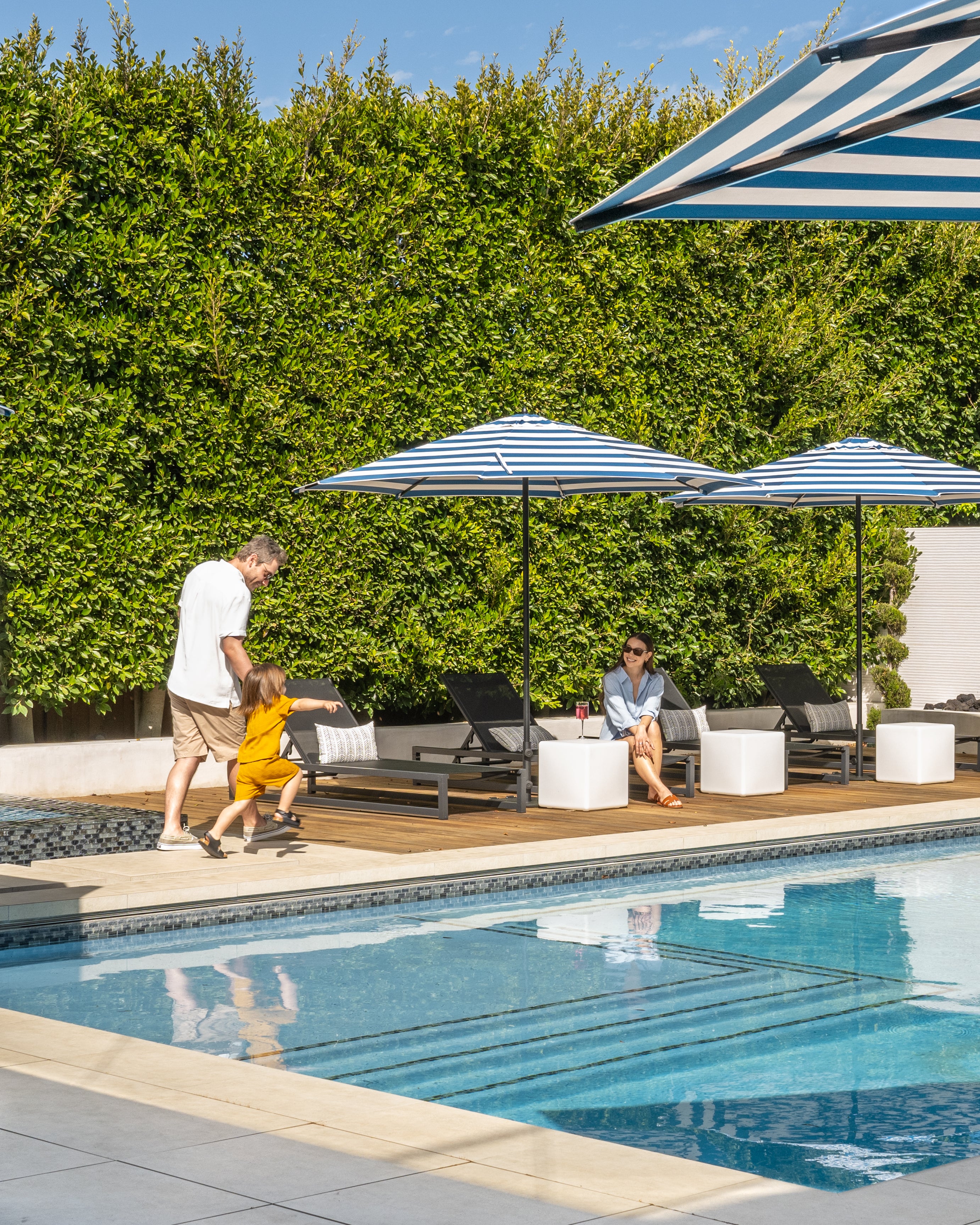
A small patio umbrella is one of the smartest investments you can make for a compact outdoor space. Whether you're working with a narrow balcony, a bistro-table corner, or a cozy side patio, a well-chosen 6 ft umbrella delivers meaningful shade without overwhelming your square footage. The key is finding one that pairs a slender, space-conscious profile with the kind of durable materials that actually hold up to wind, UV, and daily use.
What to look for
- Canopy fabric: Look for solution-dyed Sunbrella or Terylast — both resist fading, mildew, and moisture far better than budget polyester
- Frame material: Aluminum resists rust and keeps weight low; fiberglass ribs flex under wind rather than snapping
- Base compatibility: A compact umbrella still needs a stable base — confirm the pole diameter matches your table or standalone base
- Tilt and vent: A tilt mechanism lets you chase the sun throughout the day, and a vented canopy dramatically reduces uplift in breezy conditions
Why a 6 ft Umbrella Is the Sweet Spot for Small Spaces
Six feet strikes a rare balance between genuine shade coverage and spatial modesty. A larger 9 ft or 11 ft market umbrella demands a heavy base, a wide table, and enough clearance that it often simply won't fit on a standard apartment balcony or small patio slab. A 6 ft canopy, by contrast, covers a two- or four-person bistro table comfortably while leaving room to move, open a door, or place a planter nearby.
Beyond the size math, smaller umbrellas tend to be lighter and easier to open, close, tilt, and store at the end of the season. That ease of use matters more than most buyers expect — a heavy, clunky umbrella gets left in the same position all day, while a nimble 6 ft model gets tilted, repositioned, and actually used. For renters especially, portability is a genuine benefit: a compact umbrella moves with you.
It's worth noting that 'small' doesn't mean flimsy. The best small patio umbrellas use the same commercial-grade pole and canopy construction as their larger siblings — the footprint shrinks, but the build quality shouldn't. That's exactly what separates premium 6 ft options from the bargain-bin versions that fold inside-out after one gusty afternoon.
Best for: Anyone prioritizing shade coverage without sacrificing precious square footage
The Slight™ — Precision-Built for Compact Outdoor Living
The Slight™ was designed specifically with tight spaces in mind, and every dimension reflects that intention. Its streamlined canopy profile and slender pole make it the go-to choice when you need a real umbrella — not a novelty parasol — but genuinely can't spare much room. Despite its compact footprint, The Slight™ uses a Sunbrella or Terylast canopy, which means the fabric is solution-dyed all the way through. Colors stay vivid season after season, and the material sheds water cleanly rather than absorbing and staining.
The frame is where The Slight™ earns its keep in windy conditions. Fiberglass-reinforced ribs flex under pressure rather than resisting and breaking, so an unexpected gust bends the canopy slightly and recovers rather than inverting it. For balcony living where wind gusts between buildings are common, this engineering detail is the difference between an umbrella that survives summer and one that needs replacing mid-season.
Setup is refreshingly simple: the push-lift mechanism is smooth, the pole is sized to fit most compact umbrella bases and standard table pole holes, and the overall weight is low enough to reposition solo without straining. If your balcony is your main outdoor escape and you want something that looks considered rather than improvised, The Slight™ is the natural starting point.
Best for: Balcony dwellers and bistro-table owners who want premium materials in a genuinely small profile

The Lean™ — When Your Space Calls for an Off-Center Approach
Sometimes the problem isn't just size — it's geometry. A wall-hugging table, a narrow deck rail, or a corner setup can make a center-pole umbrella awkward regardless of how small the canopy is. That's where The Lean™ comes in. Its offset or cantilever-style design positions the shade exactly where you need it without a pole bisecting your table or blocking your sightlines. For balconies where furniture has to hug the wall, this flexibility is genuinely transformative.
The Lean™ shares the same commitment to canopy quality as the rest of the Midtown lineup — Sunbrella and Terylast fabrics that handle UV, rain, and salt air without degrading. The arm and frame are engineered to handle the leverage forces inherent to an offset design, so you're not trading structural integrity for positional versatility. A weighted base keeps everything anchored, and the lean angle can be adjusted to follow the sun as it tracks across your space.
Practically speaking, The Lean™ opens up furniture arrangements that simply aren't possible with a center-pole umbrella. You can push a table flush to a railing or wall, place chairs all the way around it, and still have the canopy positioned directly overhead. For small patios and balconies where every inch of usable surface matters, that kind of layout freedom is worth as much as the shade itself.
Best for: Wall-adjacent setups, corner balconies, or anyone who needs shade without a center pole in the way

Choosing the Right Canopy Fabric for Year-Round Performance
Canopy fabric is the component that takes the most punishment and the one most buyers underestimate. Budget umbrellas use solution-coated polyester — the color is sprayed on the surface and begins fading within a single season, especially in direct sun. Sunbrella and Terylast fabrics, used across the Midtown lineup including The Slight™ and The Lean™, are solution-dyed: color is locked into every fiber, so there's no surface layer to peel, crack, or fade unevenly.
Mildew resistance matters enormously for anyone leaving an umbrella out through morning dew, rain, or coastal humidity. Lesser fabrics trap moisture in their weave and develop dark spots that won't wash out. Sunbrella and Terylast are engineered to dry quickly and resist mold at the fiber level, not just via a surface treatment that wears off. A quick rinse with mild soap and water is genuinely all the maintenance most owners ever need.
UV protection is the third pillar. A canopy's UPF rating tells you how much ultraviolet radiation it blocks — for a shade umbrella used to protect skin, a high UPF rating isn't a marketing detail, it's the point. Premium solution-dyed fabrics maintain their UV-blocking properties throughout their lifespan, whereas faded and degraded budget fabrics offer progressively less protection as the season goes on.
Best for: Buyers prioritizing long-term value, color retention, and genuine UV protection
Bases, Tables & Setup Tips for Small-Space Umbrellas
A small umbrella still needs a stable foundation, and this is an area where buyers often go wrong. The general rule: your base weight should match the canopy size and your local wind conditions. A 6 ft umbrella in a calm, sheltered courtyard can get away with a lighter base than the same umbrella on an exposed rooftop terrace. When in doubt, size up on the base — an umbrella that tips over in a moderate breeze is a safety hazard as much as an inconvenience.
For table umbrellas, confirm the pole diameter before purchasing. Most 6 ft umbrellas, including The Slight™, are sized to fit standard table pole holes, but it's worth double-checking your table's opening measurement. An umbrella that wobbles in its table hole because of a diameter mismatch won't tilt correctly and will feel unstable in any wind. Pole rings and spacers can fix minor gaps, but a proper fit is always preferable.
Storage and seasonal care extend umbrella life dramatically. Closing the canopy when you're not outside is the single most impactful habit you can build — even the toughest Sunbrella fabric wears faster under sustained UV and wind than it does in a closed position. A storage cover adds another layer of protection and keeps the canopy clean between uses. For balcony owners, a compact umbrella that closes down to a slim profile also means it doesn't obstruct your view or take up visual space when you don't need shade.
Best for: First-time buyers who want practical setup and care guidance before purchasing
