
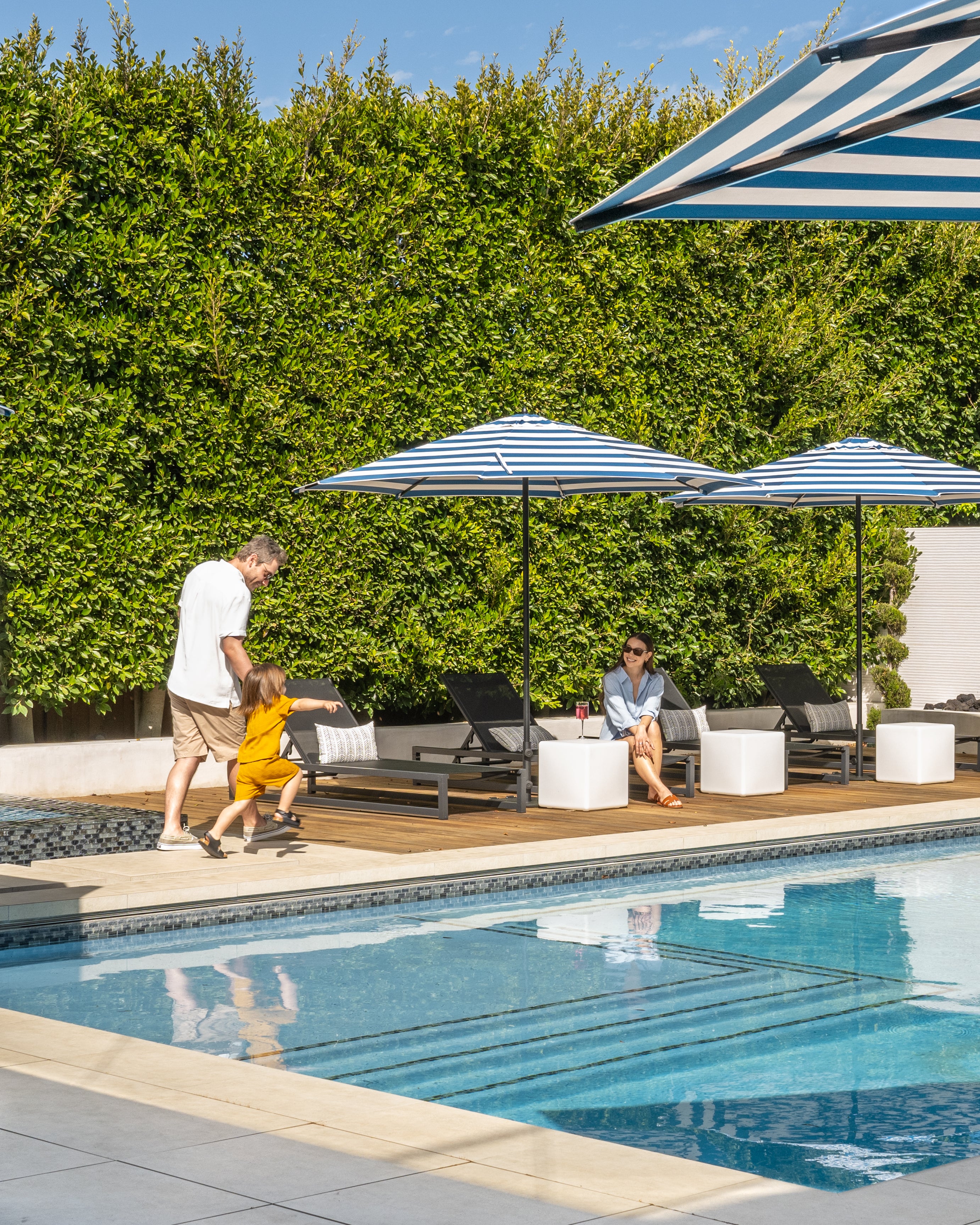
A wood patio umbrella brings a warmth and craftsmanship to your outdoor space that aluminum simply cannot replicate — the rich grain, the natural tones, the sense that your patio furniture was meant to last. But not every wooden umbrella is built the same way, and choosing the wrong one can mean warped poles, faded canopies, or a frame that wobbles in the first summer breeze. This guide walks you through exactly what to look for and matches you with the right Midtown Umbrellas model for your specific setup.
What to look for
- Frame material and joinery quality — look for hardwoods like eucalyptus or teak with tight, reinforced hub connections that resist splitting and cracking over seasons
- Canopy fabric — premium options like Sunbrella or Terylast offer fade-resistant, water-repellent protection that outlasts budget polyester by years
- Opening mechanism — a smooth, reliable lift system (crank, push-button, or pulley) makes daily use effortless and reduces wear on the frame
- Wind resistance — rib count, rib material (fiberglass vs. basic wood spokes), and overall frame weight all determine how your umbrella holds up on breezy afternoons
Why Choose a Wood Patio Umbrella Over Other Materials
Wood patio umbrellas occupy a unique space in outdoor design — they feel intentional rather than utilitarian. While powder-coated aluminum and resin poles have their place, a hardwood frame communicates quality and permanence in a way that synthetic materials struggle to match. This matters especially when your patio is an extension of your home's aesthetic, whether you're working with teak dining sets, rattan loungers, or rustic stone pavers.
Beyond looks, high-quality wooden umbrellas are genuinely robust. Properly finished hardwoods resist moisture absorption, and when paired with a premium canopy fabric like Sunbrella, the complete package can perform season after season with minimal maintenance. The key is sourcing from a brand that treats the wood correctly from the factory — sealing, sanding, and finishing to a standard that holds up under UV exposure and seasonal humidity swings.
It's also worth noting that wood frames tend to be heavier than aluminum counterparts, which actually works in your favor on calm-to-moderate wind days. That mass provides stability. The trade-off is that you'll want a solid, appropriately weighted base — typically 50 lbs or more for a standard 9-foot canopy — to keep things anchored safely.
Best for: Homeowners who prioritize natural aesthetics and want a long-lasting centerpiece for a dining or lounge patio.
Classic Style: The Wooden™ and The Wooden 2™
The Wooden™ is Midtown Umbrellas' foundational wood patio umbrella — a clean, well-proportioned shade solution designed for residential patios where style and ease of use matter equally. The hardwood pole and ribs carry a smooth finish that resists splintering, and the Sunbrella canopy options mean you're getting one of the most fade-resistant fabrics on the market stretched over a frame that was built to support it properly. If you want a reliable, beautiful umbrella without overcomplicating the decision, this is the natural starting point.
The Wooden 2™ evolves that formula with refinements to the rib structure and canopy attachment, giving it a slightly more polished look when open and better tension distribution across the fabric. This means the canopy lies flatter and more evenly, which isn't just an aesthetic win — it also reduces stress points that can cause premature wear along the seams. For buyers who want the warmth of a wood frame but expect their umbrella to look sharp over many seasons, the Wooden 2™ represents a meaningful upgrade.
Both models suit round dining tables in the 48- to 60-inch range and pair naturally with teak, eucalyptus, or painted wood furniture. They work well under a pergola or free-standing with a quality base, and their classic silhouette means they'll never look dated as your outdoor decor evolves.
Best for: Residential patios, dining sets, and anyone stepping into a premium wood umbrella for the first time.


Go Bigger: The Supreme Wooden™ for Large Spaces
When your patio demands more coverage — a large dining table, a generous lounge area, or a hospitality setting that needs to shade multiple guests at once — the Supreme Wooden™ steps up with a commanding presence that smaller umbrellas simply cannot deliver. Its larger canopy diameter and reinforced hardwood frame work together to provide the kind of deep, reliable shade that makes outdoor spaces genuinely comfortable in the middle of the afternoon, not just in the early morning or at dusk.
The construction on the Supreme Wooden™ reflects its elevated purpose. The pole diameter is more substantial, the hub connections are engineered to handle the increased load of a larger canopy, and the rib count ensures even tension across a wider span of fabric. This matters practically: a poorly built large umbrella will sag, list to one side, or develop stress tears at the rib tips within a season or two. The Supreme Wooden™ is built to avoid all of that.
This is also the model that works beautifully in semi-commercial settings — a boutique hotel courtyard, a restaurant patio, a winery terrace — where you need the natural elegance of wood but can't afford the operational headache of a fragile or high-maintenance product. Pair it with a commercial-grade in-ground mount or a heavy ballast base, and it becomes a fixture rather than just a furniture accessory.
Best for: Large residential dining areas, entertaining patios, and light commercial hospitality settings.

Square Coverage Done Right: The Square Swilt™
Most patio umbrellas are round, and most patios are not — they're rectangular decks, square tile terraces, or linear outdoor dining arrangements that a circular canopy covers inefficiently. The Square Swilt™ addresses this directly with a square canopy profile that maps far more naturally onto the actual geometry of how people arrange outdoor furniture. You get better coverage per square foot of canopy and a cleaner, more architectural look that suits modern and transitional outdoor design especially well.
The Swilt™ mechanism is worth highlighting because it's what separates this umbrella from generic square alternatives. The tilting system is smooth and lockable, allowing you to angle the canopy toward the afternoon sun without having to reposition your base or rotate your furniture. For west-facing patios in particular, this functionality is the difference between an umbrella you actually use every day and one you give up on by midsummer.
The canopy fabric on the Square Swilt™ is held to the same Midtown standard — Sunbrella or Terylast options that handle UV, moisture, and repeated opening and closing without fading or degrading prematurely. If your patio has a rectangular table or a square conversation arrangement, this is the shape-smart choice.
Best for: Modern patios with square or rectangular furniture layouts, especially west-facing spaces that benefit from tilt functionality.

Effortless Operation: The Rise and Click™
One of the most underrated features in a patio umbrella is how easy it is to open and close — not just on day one, but after two seasons of use and weather exposure. The Rise and Click™ was designed around that exact problem. Its push-button opening mechanism requires no cranking, no threading, and no two-handed wrestling with a stuck pulley. You lift and click, and the canopy opens fully, locked securely in place. This simplicity is genuinely useful if you're opening your umbrella every morning and closing it every evening, or if you have guests or staff who need to operate it without instruction.
The mechanism isn't just convenient — it's mechanically sound. The click-lock system distributes the canopy's load evenly across the hub when open, reducing the wobble and flex that can develop in lesser umbrellas when the wind picks up. When closed, it draws the canopy down cleanly without bunching, which matters for both the appearance of your patio and the longevity of the fabric.
Paired with a hardwood frame finished to Midtown's standards, the Rise and Click™ makes a compelling case that premium outdoor living shouldn't require any friction — literal or otherwise. It suits both residential buyers who want the best daily-use experience and property managers overseeing multiple umbrella installations who need reliability without maintenance complexity.
Best for: Daily-use residential patios and hospitality venues where quick, reliable operation matters as much as aesthetics.

How to Care for Your Wood Patio Umbrella
The single best thing you can do for a wood patio umbrella is close it when it's not in use. This applies especially in high-wind conditions — most umbrella frames, regardless of quality, are not designed to withstand sustained winds above 25 to 30 mph when open. A quick close during afternoon thunderstorms or gusty evenings will add years to both your frame and your canopy. When you're done for the season, store the umbrella in a breathable cover or bring it indoors to protect the wood from prolonged moisture exposure.
For the wood itself, a light application of teak oil or an appropriate hardwood sealant once a season keeps the grain nourished and resistant to cracking. Avoid harsh chemical cleaners on the frame — warm water and a soft brush are sufficient for routine cleaning. For the canopy, Sunbrella and Terylast fabrics can be spot-cleaned with mild soap and water, and most can handle a thorough rinse from a garden hose without issue.
Finally, inspect your hardware annually — tighten any loose screws at the hub, check the rib tips for signs of wear or splitting, and confirm that your base is still providing adequate support. These simple ten-minute checks cost nothing and prevent the kind of gradual deterioration that turns a repairable issue into a replacement purchase.
Best for: Anyone who wants to protect their investment and maximize the lifespan of their wood umbrella across multiple seasons.
