
The right patio umbrella does more than block the sun — it defines your outdoor space, protects your furniture from fading, and stands up to years of weather. The wrong one fades in a season and tips in the first gust. After more than a decade building umbrellas for backyards, restaurants, hotels and resorts, we’ve learned exactly what separates an umbrella that lasts from one that disappoints. Here’s how to choose — and our favorites for every kind of space.
What makes a great patio umbrella?
A patio umbrella is a multi-year investment, and four things decide whether it’s a great one:
- Frame. Rust-proof aluminum is the durable standard; fiberglass ribs flex in wind instead of snapping. Cheap steel rusts and plastic cracks.
- Canopy fabric. Sunbrella and Terylast are solution-dyed to resist fading, water and UV for years — ordinary polyester fades in a single summer.
- Lift & tilt. A smooth crank and auto-tilt let you angle the canopy and follow the sun all day.
- Size & base. The canopy should extend about 2 ft past the table on every side, anchored on a properly weighted base.
Best overall: cantilever (offset) umbrellas
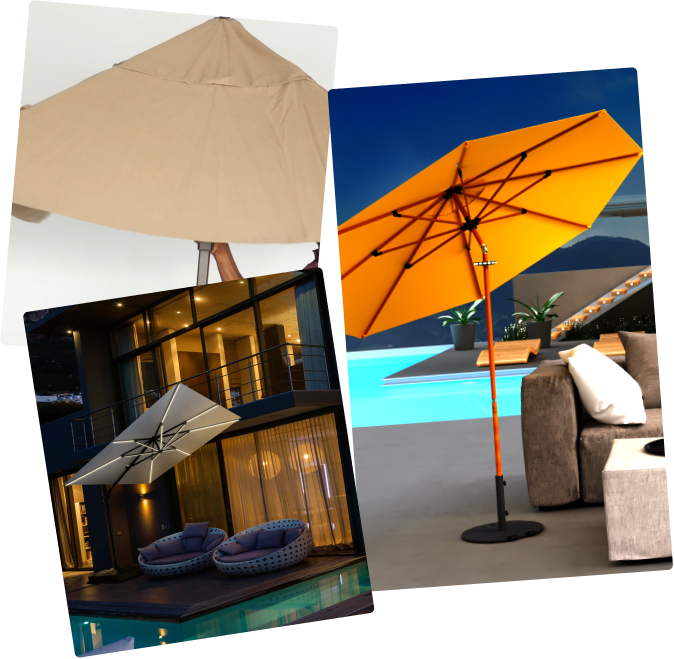
For most patios, a cantilever umbrella is the most versatile shade you can buy. Because the pole sits off to the side, the space underneath stays completely open — ideal for a dining set, a pair of loungers, or a conversation group with nothing in the way. A quality cantilever rotates a full 360 degrees and tilts, so you can chase the sun across the afternoon without ever moving your furniture. Look for a sturdy cross base, a smooth crank-and-tilt mechanism, and a fade-proof Sunbrella or Terylast canopy that holds its color season after season. The Grande Round, Grande Square and Supreme are built for exactly this.
Cantilevers really shine when you want to shade something other than a table — a lounge chair, a hot tub, or a corner of the deck — because you park the base out of the way and swing the canopy exactly where the sun is. The trade-off is that they need more counterweight than a table umbrella, so invest in a proper cross base and add weight plates if you’re in an exposed spot. Sizes from 10 ft round to large squares let you match the canopy to the area you’re covering. If you only buy one umbrella for a modern patio, this is usually the one.
Build quality is everything with a cantilever, because the arm carries the entire canopy. Powder-coated aluminum resists rust and chipping, and a smooth, well-geared crank makes opening effortless even on the largest sizes. Round canopies give a soft, classic silhouette; square canopies maximize coverage over rectangular seating. Paired with a Sunbrella or Terylast top, a good cantilever outlasts several cheaper umbrellas — which is exactly what makes it the better value over time.
Best for: open seating areas, loungers, hot tubs and pools, and modern patios where a center pole would get in the way.


Best for wind: fiberglass-rib umbrellas
If your patio catches a breeze — coastal, rooftop, lakeside, or just an open backyard — the frame matters more than anything else. Fiberglass ribs flex and bow in a gust and then spring back, where rigid aluminum or cheap steel bends and stays bent. That flexibility is the single biggest reason an umbrella survives a windy summer instead of ending up at the curb. Pair one with a heavy base, keep it clear of wind tunnels between buildings, and close it in storms, and it will last for years. The Swilt and The Push and Pop are our most wind-ready picks.
Two details beyond the frame make a real difference in wind: a vented canopy (a top vent lets gusts escape instead of turning the umbrella into a sail) and enough base weight. As a rule, the bigger the canopy, the more weight you need underneath — under-weighting is the single most common reason umbrellas blow over. And no umbrella, however well-built, should be left open in a real storm: a ten-second close is a lot cheaper than a replacement.
If you’ve already replaced an umbrella or two after a windy weekend, a fiberglass-rib model is the upgrade that finally sticks — it’s the standard along the coast and on high-rise balconies for good reason. Combine the flexible ribs with a vented canopy and a heavy base, store it closed when it’s not in use, and you’ve eliminated the three things that destroy most umbrellas. A little habit buys years of extra life.
Best for: coastal, lakeside and rooftop settings, high-rise balconies, and any open, breezy backyard.


Best with lights: solar LED umbrellas
The right umbrella doesn’t clock out when the sun goes down. Solar LED umbrellas build soft lighting right into the ribs — charging through the day and glowing through the evening, with no wiring, no outlets, and no extension cords across the patio. They turn a dinner table into a destination and keep the conversation going long after dusk, with warm-white or color-changing options depending on the model. The LED Swilt and The Glow deliver built-in lighting with the same tilt and build quality as the rest of our range.
Solar LED umbrellas are ideal for dining areas, bar carts and poolside lounging where running power would be a hassle. Look for lights built into the ribs rather than a clip-on puck — they spread light more evenly and won’t get knocked loose. Warm white is the most flattering for dinners; color-changing RGB is fun for parties and kids’ areas. Because they charge by day and run by night, there’s nothing to plug in and nothing to trip over.
Beyond the ‘no wiring’ convenience, an LED umbrella changes how late you can actually use your patio — a soft glow overhead means dinner doesn’t end when the sun sets, with no string lights or lanterns to drag out every evening. Most solar models hold enough charge for several hours after a sunny day; if your spot is shadier, look for one with a USB-rechargeable battery as backup.
Best for: dinner tables, outdoor bars, pool lounging, and anyone who entertains after dark.


Best for restaurants, hotels & pools: commercial-grade
Restaurants, hotels, resorts and pool decks put umbrellas through far more than a backyard ever will — open-to-close use, daily wind, and weather that never lets up. Commercial-grade umbrellas answer with heavier frames, reinforced ribs and contract-quality canopies engineered to take the abuse and still look sharp for guests, day after day. The Yacht Cleat, The Bamboo and The Supreme bring hotel-grade durability — and we offer bulk and wholesale pricing for hospitality and multi-location orders.
For hospitality buyers, consistency matters as much as durability: matching canopies across a patio, colors that hold up under daily UV, and frames staff can open and close quickly during a rush. Commercial models are also easier to service — replacement parts and canopies keep a whole fleet looking uniform for years instead of forcing a full re-buy. If you’re outfitting multiple locations, talk to us about volume pricing and lead times.
For a business, an umbrella is equipment — and the math favors buying once. A commercial frame that survives years of daily open-and-close and relentless sun costs less over its life than replacing consumer umbrellas every season, and it keeps your patio looking polished rather than patched together. Consistent canopy colors reinforce your brand, sturdier frames are safer around guests, and many of our hospitality clients standardize on one or two models across every location.
Best for: restaurants, cafes, hotels, resorts, country clubs, HOAs and pool decks.


Best classic & table umbrellas
Sometimes the classic look is exactly right. A traditional crank-lift market umbrella centers neatly through a patio table, throws even shade over the whole setting, and never goes out of style — while a warm wood-tone frame adds a natural, upscale touch to gardens and decks. These are the dependable everyday workhorses of outdoor shade. The Swilt, The Lean and The Wooden 2 cover the classic styles in dozens of canopy colors.
Market umbrellas are the easiest to live with: drop the pole through your table’s umbrella hole, set it in a base, and crank it up. They suit everything from a casual breakfast nook to a formal dining set, and the huge canopy-color selection makes them simple to match to existing furniture. Choose an auto-tilt model if your table sits where the afternoon sun comes in low and at an angle.
The appeal of a classic market umbrella is how effortlessly it fits in — it looks right over a farmhouse table, a sleek modern set, or a garden bench alike. Wood-tone frames add warmth that pairs beautifully with natural materials and greenery, while aluminum keeps maintenance close to zero. With dozens of canopy colors to choose from, it’s the easiest way to tie a patio’s look together — or add a welcome pop of color.
Best for: traditional patio tables, garden settings and breakfast nooks — anyone who loves a timeless look.


What size patio umbrella do I need?
Golden rule: your canopy should extend about 2 feet beyond the table edge on every side.
Shading seating or a pool instead of a table? Size up — bigger canopies cover more ground.
Make it last
A premium umbrella rewards a little care with extra years of life. Close it whenever the wind picks up, keep it anchored on a properly weighted base, and slip on a waterproof cover during the off-season or long stretches of rain. And when a canopy finally starts to fade after years of sun, you don’t need a whole new umbrella — a replacement canopy brings it right back to life for a fraction of the cost.